
Notes from the SupplyWolf team

    SupplyWolf Perspectives

    Field notes, conference takeaways, and category-level patterns we are seeing across the supply chain software market.

    MODEX 2026

    MODEX 2026: More automation, same operational complexity
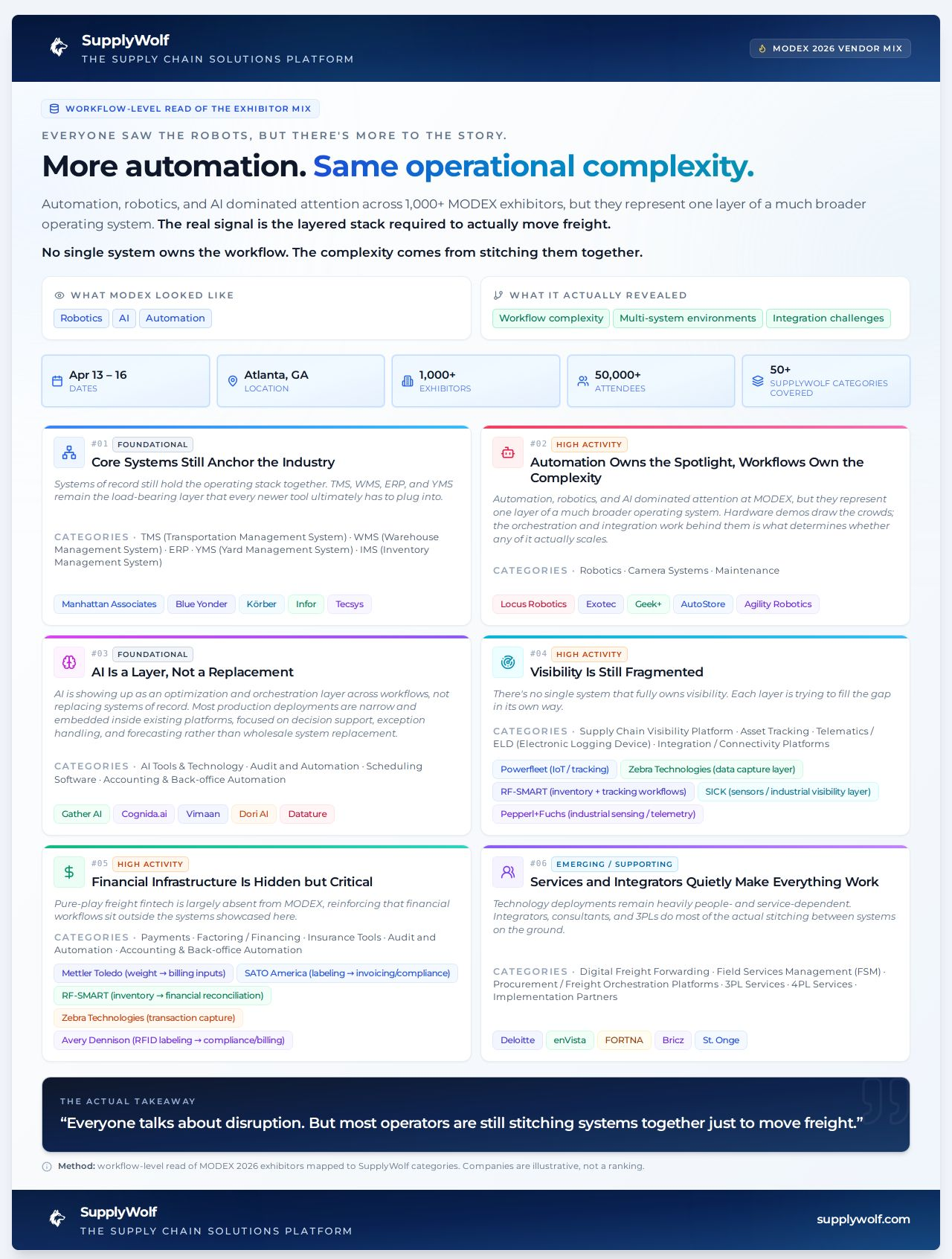
    SupplyWolf MODEX 2026 vendor mix infographic showing the layered stack required to move freight

    At MODEX 2026, one message came through clearly: the technology has arrived. The harder problem is orchestration, getting it to work together inside real operations. Automation, robotics, and AI dominated the floor across more than 1,000 exhibitors, but no single system owns the workflow. The complexity is in stitching them together.

    Three patterns stood out walking the floor:

    • Automation is no longer a pilot. It is being deployed at scale.
    • AI has moved past insights and hypotheticals. It is starting to do the actual work.
    • Integration, not innovation, is the real bottleneck.

    Operators are not asking which technology is the most impressive. They are asking whether it will actually work inside their operation. In practice, multiple systems are usually required to execute a single workflow, and that is where things get messy. Visibility is fragmented across hardware, software, and data layers. Financial workflows sit outside most of the systems shown on the floor. Integration complexity remains the biggest barrier to adoption.

    The disruption headlines are loud, but most teams are still stitching systems together just to move freight. Closing that gap is exactly why we built the SupplyWolf platform: to help buyers cut through the noise and find the systems that actually fit the workflow they already run.

    The full breakdown of the MODEX 2026 vendor mix, including a workflow-level read of the categories and companies that showed up, lives on our recap page.
    Industry perspective

    Why fuel cards belong in the strategy stack

    Fuel is cheap until it is not. And when prices spike, like they tend to during periods of global pressure, something interesting happens: fuel stops being operational and starts becoming strategic.

    Most people still think about fuel in terms of price per gallon. Better operators think about where it is purchased, how it is controlled, and how it is tracked across drivers, routes, and fleets. That is where fuel cards stop being a convenience and turn into an actual advantage.

    When prices rise, fuel cards are not just about payment. They are about cost control through discount networks and spend limits, visibility into who is fueling where and why, fraud prevention (which becomes a much bigger problem as costs go up), and data that actually informs routing and pricing decisions.

    For brokers, the downstream effect is real:

    • Fuel volatility directly impacts rate conversations.
    • Carrier behavior shifts based on access and cost.
    • Margins tighten quickly if fuel is not being factored in correctly.

    The gap between operators who manage fuel and operators who optimize it gets exposed quickly in markets like this one. That is why we have been spending time mapping the fuel card category on the SupplyWolf platform: it is one of the categories where the right provider choice has compounding effects across cost, visibility, and risk.

    TIA 2026

    TIA 2026 floor signals: AI on top, core systems still core

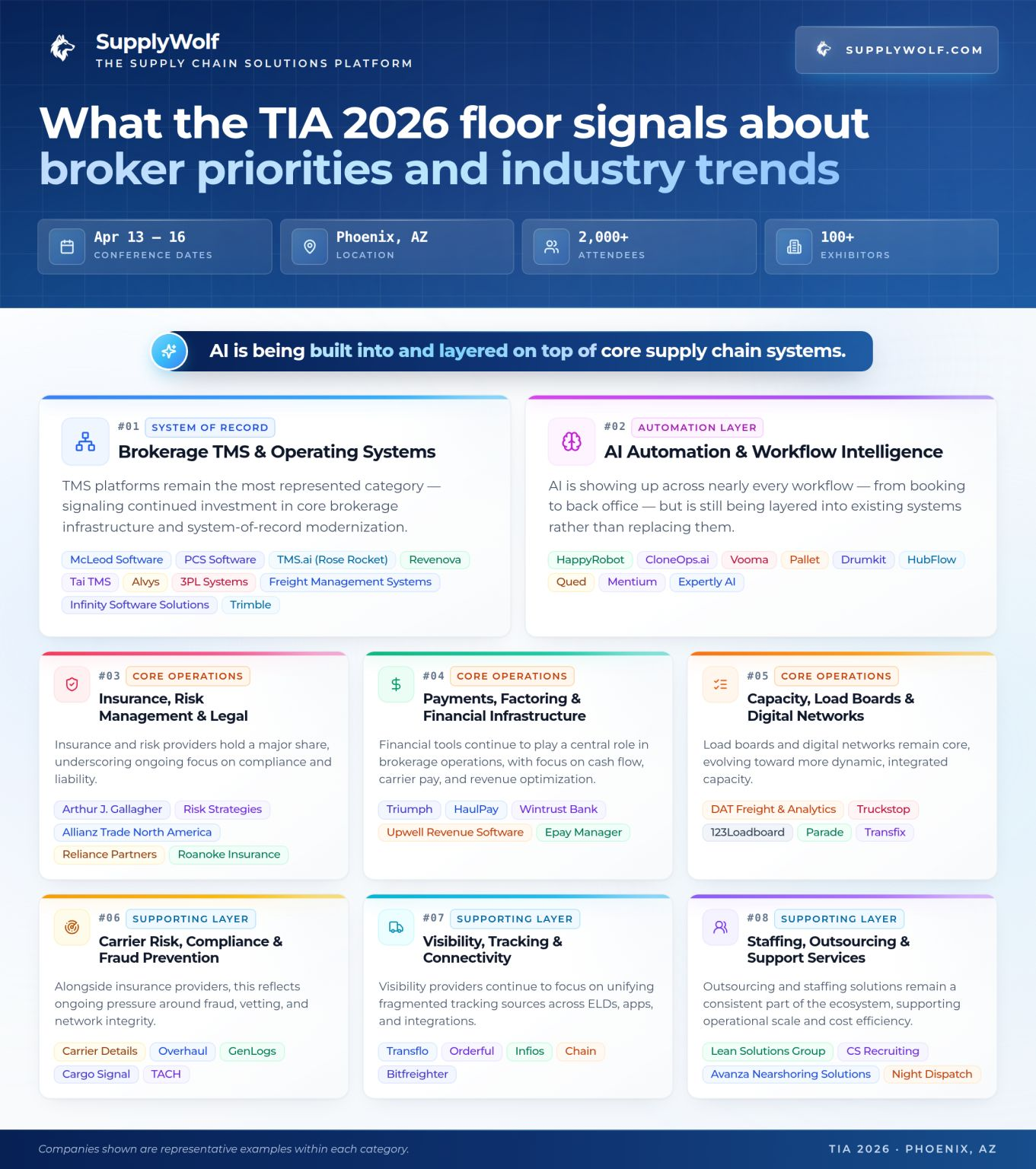
    SupplyWolf TIA 2026 broker priorities infographic showing eight vendor clusters across the show floor

    One of the clearest signals from TIA 2026 was the exhibitor distribution and the traffic patterns on the trade show floor. The concentration of vendors across specific workflows points directly at where the broker industry is focused right now.

    The takeaway: core systems like TMS are still doing the heavy lifting, with AI being built into and layered on top of those systems rather than replacing them. AI is showing up across nearly every workflow, from booking to back office, but the underlying systems of record are not going anywhere.

    Walking the floor, eight clusters stood out:

    1. Brokerage TMS and operating systems (the system of record layer)
    2. AI automation and workflow intelligence
    3. Insurance, risk management, and legal
    4. Payments, factoring, and financial infrastructure
    5. Capacity, load boards, and digital networks
    6. Carrier risk, compliance, and fraud prevention
    7. Visibility, tracking, and connectivity
    8. Staffing, outsourcing, and support services

    That mix tells a story: brokers are continuing to invest in core infrastructure while quietly layering AI on top to extract more value from the systems they already run. Insurance, payments, and visibility are getting just as much attention as the AI conversations on the main stage.

    This is the kind of category-level pattern we map continuously on SupplyWolf, across every supply chain conference, vendor catalog, and workflow we cover.